Dental Occlusion
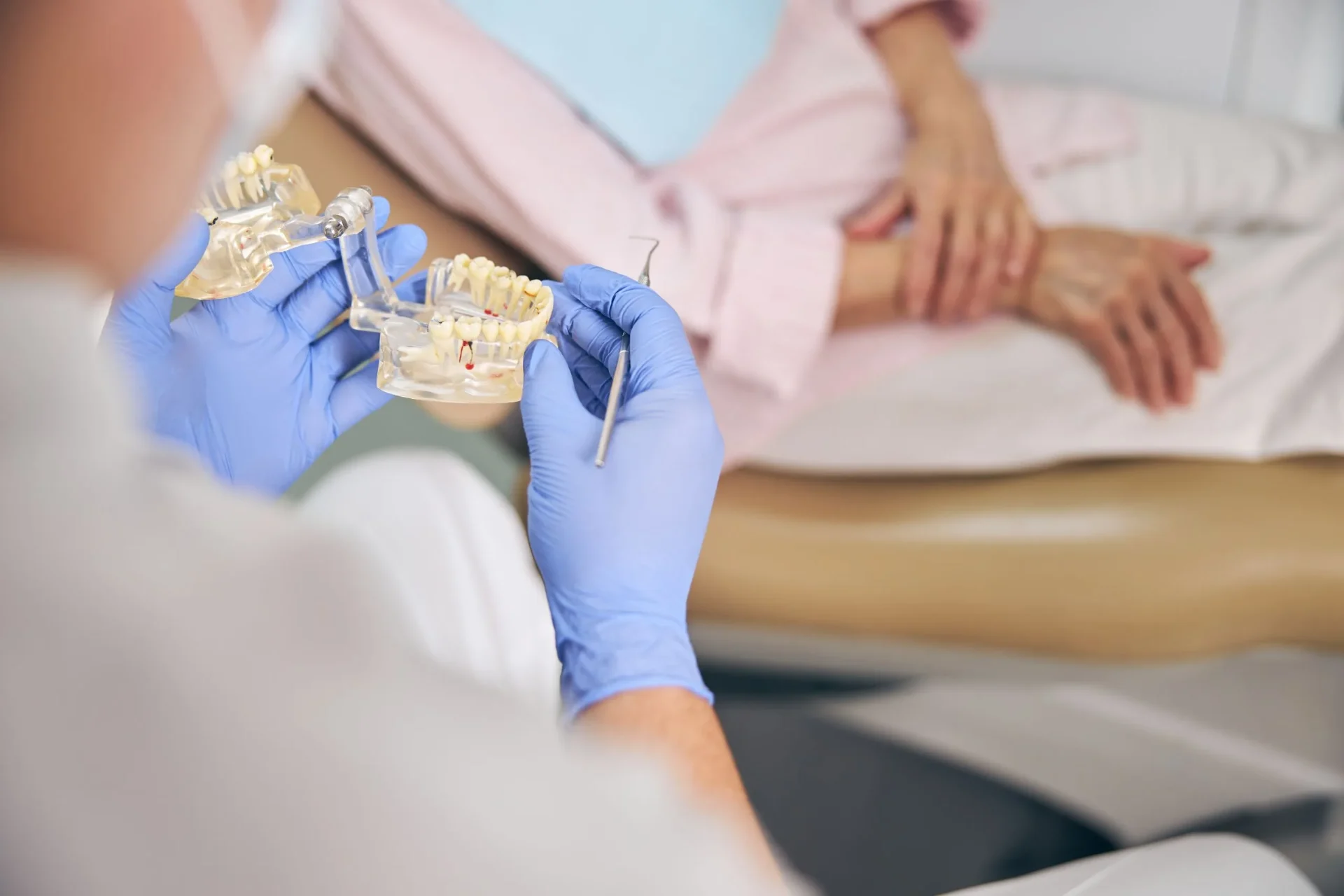
Functional balance and harmony for your smile
Dental occlusion refers to the way the upper and lower teeth come together during chewing and when the mouth closes. Incorrect occlusion can cause chronic headaches, temporomandibular joint (TMJ) dysfunction, premature tooth wear, teeth grinding (bruxism) and facial muscle discomfort. At Alinea, we carry out a complete occlusal assessment using digital technology — including computerised analysis of occlusal contacts and articulator mounting — to diagnose precisely and offer personalised treatments that restore functional balance.
Alinea Premium Oral Care is a group of five dental clinics in Portugal — Algarve, Cascais, Estoril, Lisbon and Porto — with a multidisciplinary team covering every dental speciality.
What is dental occlusion?
Dental occlusion is the contact relationship between the upper and lower teeth during chewing and when the mouth closes. Balanced occlusion distributes chewing forces evenly, protecting the teeth, muscles and temporomandibular joint (TMJ). When this harmony is disrupted — by tooth misalignment, poorly fitted restorations, missing teeth or parafunctional habits — signs and symptoms appear that can significantly affect quality of life.
Bruxism: grinding and clenching
Bruxism is the involuntary habit of grinding or clenching the teeth, usually during sleep (sleep bruxism) or during periods of stress (awake bruxism). It affects around 20% of the population and can cause severe tooth wear, fractured restorations and teeth, facial muscle pain, morning headaches and TMJ dysfunction. At Alinea, diagnosis includes assessing wear patterns, occlusal analysis and, where indicated, a sleep study.
TMJ dysfunction
Temporomandibular joint dysfunction presents as pain around the ear, clicking when opening the mouth, limited jaw opening, crepitus and muscle pain in the chewing muscles. Causes include malocclusion, bruxism, stress, trauma and arthritis. Treatment at Alinea is multidisciplinary: occlusal splints, physiotherapy, occlusal adjustment and, in refractory cases, referral to orofacial pain specialists.
Occlusal treatment at Alinea
Occlusal treatment may include custom-made night-time relaxation splints, selective occlusal adjustment (controlled reshaping of interferences), orthodontics to correct positioning, prosthetic rehabilitation to restore vertical dimension, or a combination of approaches. At Alinea, we use digital occlusal analysis technology and mounting on a semi-adjustable articulator for precise diagnosis and an evidence-based treatment plan.
Dental Occlusion
Clinical assessment. Detailed examination of occlusion, temporomandibular joint, facial muscles and wear patterns.
Diagnostic records. Impressions, bite records, photographs and radiographs for articulator mounting.
Digital analysis. Computerised analysis of occlusal contacts and study of the bite pattern.
Treatment plan. Definition of the therapeutic approach: splint, occlusal adjustment, orthodontics or rehabilitation.
Relaxation splint. Manufacture and fitting of a custom splint with precise occlusal adjustments.
Follow-up. Review appointments to adjust the splint and monitor symptom progress.
Dental Occlusion
Relief from headaches and facial pain
Protection against tooth wear
Advanced digital diagnosis
High-precision custom splints
Improved sleep quality
Prevention of tooth fractures
What is bruxism?
Bruxism is the involuntary habit of grinding or clenching the teeth, usually during sleep. It can cause tooth wear, muscle pain, headaches and TMJ dysfunction. At Alinea, we treat bruxism with personalised relaxation splints and multidisciplinary approaches.
How do I know if I have occlusion problems?
Symptoms such as frequent headaches (especially on waking), pain when chewing, joint clicking, visible tooth wear or generalised tooth sensitivity may indicate occlusion problems. An assessment at Alinea allows for an accurate diagnosis.
Is an occlusal splint uncomfortable?
Splints are custom-made from high-quality materials and most patients adapt within a few days. They are comfortable and should mainly be worn during sleep. They are precisely adjusted to ensure maximum comfort.
Can bruxism be cured?
Bruxism can be effectively managed with relaxation splints, stress management and occlusal correction, although in many cases it is a chronic condition requiring long-term follow-up. The splint protects the teeth and relieves symptoms.
What is the relationship between stress and TMJ problems?
Stress is one of the main triggers of bruxism and TMJ dysfunction. Muscle tension associated with stress increases clenching and grinding forces, overloading the joint and chewing muscles.
Clinics
- Alinea Premium Oral Care Algarve
Avenida 5 de Outubro, 129, 8135-100 Almancil, Portugal - Alinea Premium Oral Care Cascais
Marina de Cascais, Loja 56, 2750-800 Cascais, Portugal - Alinea Premium Oral Care Estoril
Avenida de Saboia, 159 A, 2765-278 Monte Estoril, Portugal - Alinea Premium Oral Care Lisboa
Av. João Crisóstomo, 28A, 1050-127 Lisboa, Portugal - Alinea Premium Oral Care Porto
Rua de 5 de Outubro, 190, 4100-172 Porto, Portugal
We are in the Algarve, Cascais, Estoril, Lisbon and Porto. Every clinic follows the same clinical and hygiene protocols and shares the same team of specialists.
A highly qualified and experienced team
Our team brings together dentists with advanced training in orthodontics, implantology, aesthetics and oral rehabilitation, periodontics, endodontics, paediatric dentistry and oral surgery. Every case is discussed between specialists before treatment begins.
How to book your appointment
You can book through the website form or by contacting the clinic closest to you. We are open Monday to Friday from 10:00 to 19:00 and on Saturday from 09:00 to 18:00.