Dental Implants in Porto
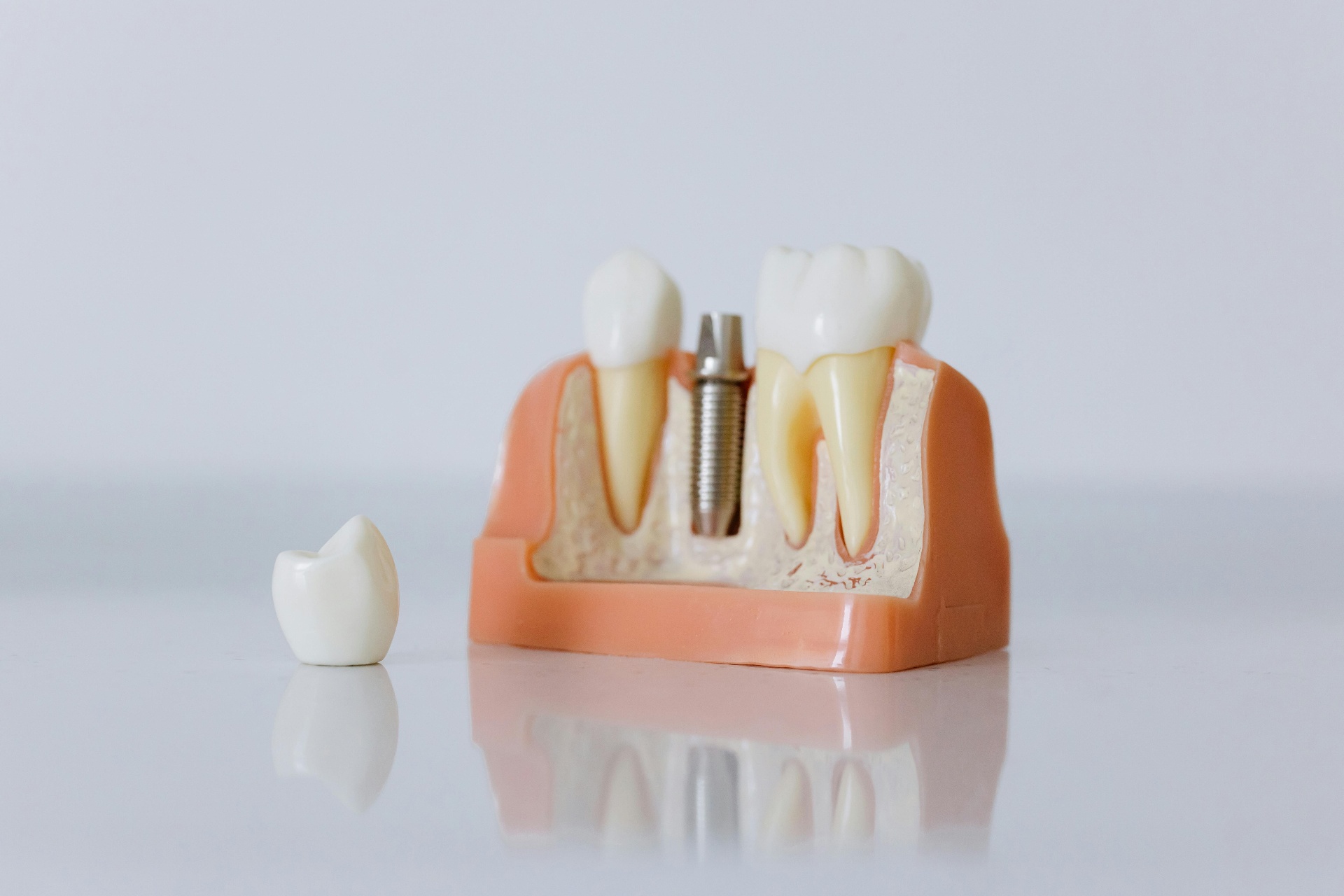
Recover your smile with confidence, comfort and natural-looking results
Dental implants are the most advanced and long-lasting solution for replacing missing teeth. At Alinea Premium Oral Care, we use biocompatible titanium implants and 3D digital planning technology to ensure total placement precision. With a success rate above 95% and a team of implantologists with more than 19 years of experience, we deliver natural, lasting results that restore your confidence and quality of life.
What are dental implants?
A dental implant is an artificial titanium root surgically placed in the jawbone to replace a missing tooth. A ceramic crown is fitted onto the implant, perfectly mimicking a natural tooth in shape, colour and function. Titanium is a biocompatible material, meaning the body accepts it without any rejection reaction. This process of implant integration into the bone — osseointegration — was discovered by Professor Per-Ingvar Brånemark in the 1960s and has since been extensively studied and refined. Today, dental implants are the closest solution to natural teeth, both in function and aesthetics.
Who needs dental implants?
Dental implants are indicated for patients who have lost one or more teeth due to decay, periodontal disease, trauma or congenital reasons. They are particularly recommended when: a tooth has been lost and the patient does not want to reduce the adjacent teeth for a fixed bridge; when ill-fitting removable dentures are causing discomfort; when several teeth have been lost and a more extensive rehabilitation such as the All-on-4 protocol is required; or when a definitive, comfortable solution that preserves the jawbone is desired. There is no maximum age limit for implant placement — provided general and oral health conditions allow it, patients of any age can benefit from this solution.
How is the procedure carried out at Alinea?
Implant treatment at Alinea follows a rigorous planning and execution protocol. It begins with a detailed clinical assessment, including 3D imaging (CBCT — Cone Beam Computed Tomography), which allows precise visualisation of the jaw anatomy, the amount and quality of available bone and the proximity of important structures such as nerves and sinuses. Based on this data, a 3D digital plan is created that defines the ideal implant position, ensuring maximum precision and predictability. Surgery is performed using surgical guides produced on a 3D printer, transferring the digital plan to the actual surgery with millimetric accuracy.
Technology and materials used
At Alinea, we use exclusively premium, globally recognised implant brands, manufactured from grade 4 titanium or titanium-zirconium alloys. Planning is carried out with state-of-the-art guided surgery software, and surgical guides are produced on 3D printers in our digital laboratory. Final crowns are manufactured in monolithic zirconia or layered ceramic over a zirconia framework, ensuring natural aesthetics and exceptional strength. The entire workflow — from intraoral scan to final crown — is digital, eliminating traditional impressions and increasing the precision of every step.
Benefits of implants vs. other solutions
Compared with removable dentures or traditional fixed bridges, implants offer significant advantages. They do not require reduction of healthy adjacent teeth (as bridges do), preserve the jawbone by transmitting chewing forces to it (unlike removable dentures, which accelerate bone loss), are fixed and stable, allowing patients to eat any food with confidence, and, with proper maintenance, can last a lifetime. Studies published in scientific journals such as the Journal of Dental Research show implant survival rates above 95% over 10 years.
Maintenance and longevity of implants
With proper care, dental implants can last a lifetime. Maintenance includes thorough daily brushing, use of interdental brushes around the implants, and regular six-monthly check-ups at Alinea. During these appointments, we take control X-rays, assess peri-implant health and perform professional cleaning with instruments specific to implants. Peri-implantitis — inflammation of the tissues around the implant — is the main threat to longevity, but is preventable with regular maintenance and good oral hygiene.
Risks and contraindications
As with any surgical procedure, implant placement carries risks that should be understood, although they are rare. The most common complications include infection at the surgical site (treatable with antibiotics), failure of osseointegration (fewer than 5% of cases) and temporary sensitivity. Relative contraindications include uncontrolled diabetes, heavy smoking, untreated active periodontal disease and treatment with intravenous bisphosphonates. At Alinea, we carry out a complete medical assessment before any procedure to identify and manage potential risks.
Post-operative recovery
Recovery after implant placement is generally straightforward. In the first 48 hours, some swelling and mild discomfort are normal, controlled with prescribed medication and ice application. Most patients return to normal activities within 2-3 days. Diet should be soft during the first week, progressing gradually. The osseointegration period typically lasts 3-6 months, during which regular check-ups are carried out at Alinea. In selected cases, we offer immediate-loading protocols that allow patients to leave with fixed provisional teeth on the same day.
How treatment is planned
- Assessment and diagnosis: Complete clinical consultation with 3D X-ray examinations (CBCT), photographs and digital intraoral scan to assess the clinical situation.
- 3D digital planning: Based on the examinations, a virtual plan of the ideal implant position is created using guided surgery software.
- Surgical guide fabrication: A custom surgical guide is 3D-printed to transfer the digital plan to the actual surgery with millimetric precision.
- Placement surgery: The titanium implant is placed in the jawbone with guided surgery, under local anaesthesia or conscious sedation. Duration: 30-60 minutes per implant.
- Osseointegration: A 3-6 month period for the implant to integrate into the bone. Regular check-up appointments to monitor healing.
- Placement of the final crown: After osseointegration, a new digital scan is taken and the final ceramic crown is manufactured and cemented onto the implant.
Benefits and treatment goals
- Permanent solution for missing teeth
- Appearance and function identical to a natural tooth
- Preservation of the jawbone
- Does not affect or wear down adjacent teeth
- Durability of more than 20 years with proper maintenance
- Success rate above 95%
- Improved quality of life and self-esteem
- Personalised 3D digital planning
Your Alinea clinic
The Alinea clinic in Porto is located on Rua de 5 de Outubro, in a central and easily accessible area. With a team of specialists across every field of dentistry, we offer excellent treatments to residents of Porto and the surrounding areas. From the Alinea Smile Club to the most advanced treatments, we are dedicated to your smile.
Alinea Premium Oral Care PortoRua de 5 de Outubro, 190, 4100-172 Porto
+351 226 090 489
Frequently asked questions
- Are dental implants safe?
- Yes, dental implants are one of the safest and best-documented solutions in dentistry, with more than 50 years of scientific evidence. The titanium used is biocompatible — the body accepts it without any rejection. Alinea's implant success rate is above 95%, in line with the best reference centres worldwide.
- How long does implant osseointegration take?
- Osseointegration — the process by which the implant fuses to the bone — generally takes between 3 and 6 months, depending on the location (upper or lower jaw) and the patient's bone quality. In selected cases, immediate loading with fixed provisional teeth on the same day is possible.
- Can I have implants if I have little bone?
- Yes. At Alinea, we use advanced techniques such as bone grafts (autologous and synthetic), sinus lifts and zygomatic implants that allow rehabilitation even for patients with significant bone loss. A CBCT assessment will determine the best option for your case.
- How long does the whole treatment take?
- Total time ranges from 3 to 9 months, depending on the complexity of the case. Placement surgery takes 30-60 minutes per implant. Osseointegration takes 3-6 months. In selected cases, immediate loading with fixed provisional teeth on the same day is possible.
- Can implants be rejected by the body?
- Technically, titanium implants are not rejected because the material is biocompatible. What can occur is failure of osseointegration — the implant does not integrate properly into the bone — which happens in fewer than 5% of cases. Risk factors include smoking, uncontrolled diabetes and poor oral hygiene.
- Can all my implants be placed in a single session?
- It depends on the case. For full-mouth rehabilitations, the All-on-4 protocol allows 4 implants per arch to be placed in a single session, with fixed provisional teeth on the same day. For single-tooth implants, several can be placed in the same session.
- Is implant surgery painful?
- No. Surgery is performed under local anaesthesia and, when requested, with conscious sedation. Post-operative discomfort is mild and controlled with medication. Most patients report that the procedure was more comfortable than they expected.
- How long do dental implants last?
- Once osseointegrated, the titanium implant can last a lifetime with proper maintenance. Studies with more than 30 years of follow-up show survival rates above 90%. The ceramic crown on the implant may need replacement after 15-20 years.